
TalentGrow Blog

![Nurture your naysayers: How to lead people who resist your leadership [vlog]](https://images.squarespace-cdn.com/content/v1/513dd8ede4b0cc0702fce2ec/1531995446322-LNBW3BRFB8LYI0I2F61Q/nurture+naysayers+TalentGrow+Halelly+Azulay+vlog+sq.jpg)
They don’t want to follow. They resist. What should you do with those naysayers?
In this short video blog (vlog), which I'm cross-posting as an 'Ask Halelly' podcast episode, I answer this question:
“How Should I Lead People Who Don't Want To Follow?”
My answer might surprise you:
Could you... thank them?

[Note: if you like to listen to learn, this post is also a podcast episode. Listen to it on episode 87!]
If you have a tendency to say Yes too much (we discussed why you shouldn’t in episode 82 of the TalentGrow Show podcast), or have a hard time saying No to requests from your boss, co-workers, employees, clients, or even in your personal life, then this blog post is for you.
Read on to learn some of the typical reasons we are reluctant to say No, some totally legitimate reasons why you should be saying No, and how to do it in a way that protects your time, independence, integrity, and your relationships and trust using my 5A Formula for Saying No.

As we stare down the last days of 2017, let’s stroll down memory lane and look back at some of the popular content I’ve already created on the TalentGrow blog. According to my website traffic statistics, what were the top 10 most visited blog posts in 2017?
Drumroll please….
Plus, an announcement about what will change in 2018. Check it out!

Even before I knew the term, I have felt like I am an expert-generalist. And while I felt drawn to it, I have felt that traditional career advice implied I was mistaken. So when I first became familiar with this term and the concept behind it, I felt like shouting Hallelujah!
In this post, I'll explain what an expert-generalist is, why you should consider becoming one, and a cool way to do it.

...gratitude is a feeling that is a key to happiness, and it is most definitely not something to save for one day (or week) per year. We really must raise our experience of gratitude all year round.
Today, I’ll give you a couple of reasons why gratitude is good for you (even better than my Jewish grandmother’s chicken soup), backed by science. We’ll look at how you can get goodness out of gratitude in different ways. Finally, I’ll help you discover (or remember) that gratitude can be experienced and expressed in every context of your life.
Earlier this year, ATD invited me to be a guest expert and create a series of instructional videos where I share insider tips from my 25+ year career in talent development.
In this one, I explain the one powerful question all facilitators must ask.
Whether you're facilitating a meeting, a client presentation, or a training or learning session or workshop, you're trying to engage your audience to actively participate. To be a truly engaging facilitator, you want to ensure you invite your audience members to ask questions and actively participate.
But HOW you ask for their questions -- that's something I want to get you to think about today.

Have you heard of the “feedback sandwich” or “compliment sandwich” approach?
This is feedback-giving advice that some people still dole out. And some people still practice.
And I hope (very much!) that after reading this post, you will not use it, ever again.
In this blog post, I’ll first describe what the feedback sandwich is, and why its proponents think it’s a good idea. I’ll then describe what’s wrong with it and what to do instead.

Last week, while I was facilitating a ‘Building Trusting Relationships in the Workplace’ workshop for one of my clients, a participant had an epiphany.
We were discussing how to build trust and repair broken trust.
This outspoken learner piped up about a damaged workplace relationship and the problems with the other person in it.
So I asked her this question that stopped her dead in her tracks…
I’ll share this question with you here, but let’s first talk about trust building.
![Don't make this nonverbal communication mistake [vlog]](https://images.squarespace-cdn.com/content/v1/513dd8ede4b0cc0702fce2ec/1504388413687-PT20T1J8ZBIBQC0OFFY8/Talentgrow+vlog+thumbnail+1.jpg)
Nonverbal communication is absolutely critical to successful interactions when there's any potential for misunderstanding. But as I explain in the short vlog, there’s still a possibility of miscommunication even when you include the nonverbal. I share a personal (painful) story about a time when I learned this the hard way. (And why is there a knife in this video?…). So please watch, enjoy, and learn about how to avoid this nonverbal communication mistake.

Periodically, we find ourselves having to make really key decisions that have critical implications. And when we stare these decisions in the eye, it often feels daunting and overwhelming.
In this post, I'll tell you two stories where the decision was tough and how a simple, magical filter question helped make the choice much less daunting.
We’ve all heard the cliché before: don’t burn bridges.
When we say that, we mean that when we leave a job (presumably), we should not do things that will cause the people there to remember us poorly.
In general, this is good advice. All things being equal, I would advise this too.
But there’s more than just not destroying your reputation as far as your former boss and colleagues are concerned.
I think that there’s a huge opportunity (read: something most of us are not paying enough attention to) in the bridge building and maintenance business.
During a recent delivery of one of my popular client workshops, Team Power, about how to develop high performing teams, we discussed seven common team development stages (I am partial to using the Drexler/Sibbert model). We also identified structural supports that help teams function optimally, reviewed the importance of trust in teams and ways to build it, discussed important team communication dynamics, and practiced applying this team development knowledge in a simulated team work situation, culminating with each learner creating an action plan for applying team dynamic best practices within their own team.
As usual, the learners were highly engaged and interested.
Also as usual, they still had some challenges they were grappling with, which came out in the form of what I call “’Yeah, but’s”.

If you are an introvert, chances are you don’t like networking. In fact, you probably despise it. Rather have a root canal. Avoid it like the plague. Think it’s a four-letter word.
But networking doesn’t have to be so awful. It doesn’t have to be so dang hard. You could actually learn to <gasp> enjoy it!
First, let’s talk about your mindset – it’s probably on the wrong track, as most people’s is, with regards to networking. And once you change that, there are many actionable, doable strategies and techniques that you can begin to implement immediately to get you started networking in an introvert-friendly, easier way.
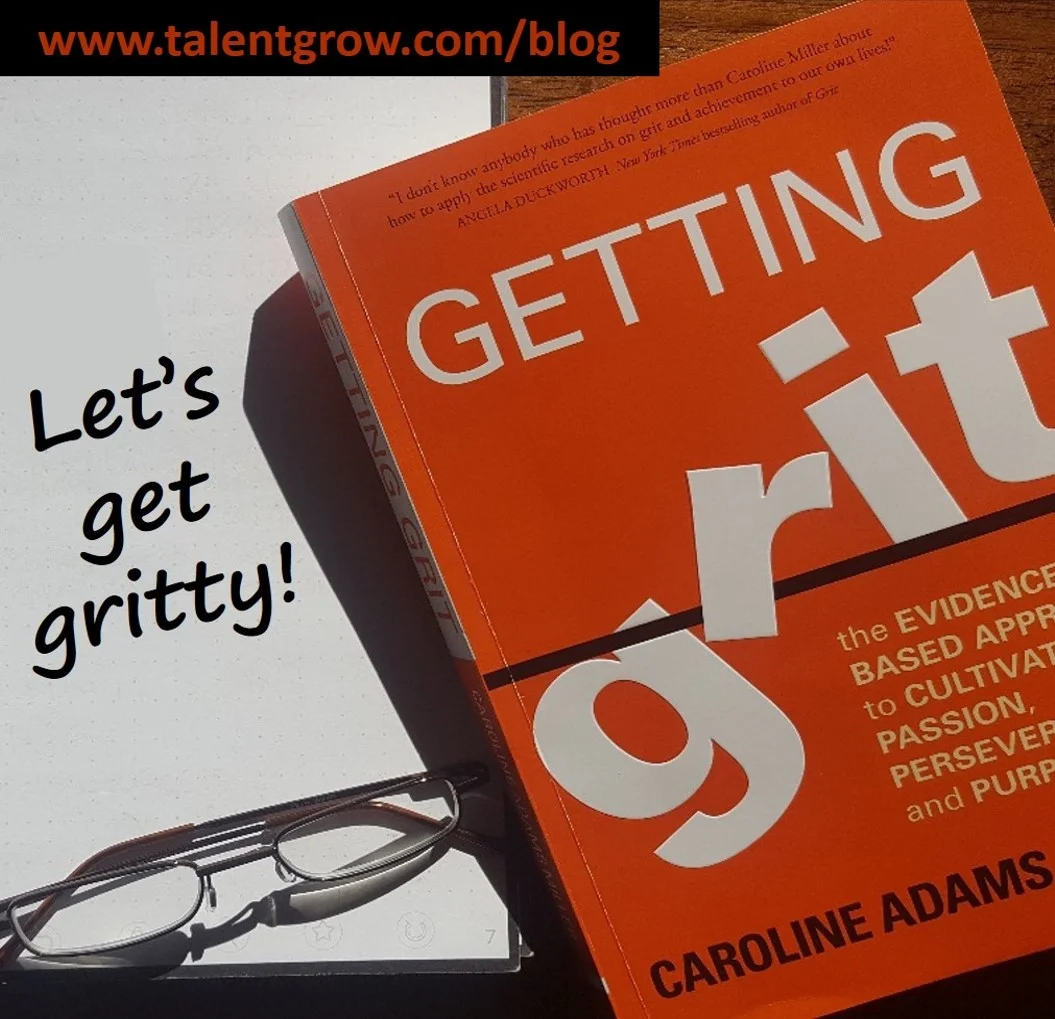
Grit is so important to goal accomplishment and success that I decided to share some golden nuggets of wisdom from both the book and the podcast right here in this post, to get you started. In this blog post, I’ll share some of Caroline’s thoughts and ideas on what is grit, specifically her concept of authentic grit, why we need to cultivate more grit in our culture, the good and bad types of grit, and how to grow your grit by adding the ingredients required for grit according to Caroline’s ‘grit recipe’.

In this blog post, I explain what a "Me too!" moment is, and how we all experience them.
They happen naturally, frequently, and it’s a good thing – it helps us build bonds with others and have more positive interactions that lead to more trusting relationships.
But furthermore, when we recognize how and why this happens, we can actually also have more input into when and how often it does. Read more about it!

Have you ever uttered these words?
“Honestly…”
“Truthfully…”
“To be frank…”
“To tell you the truth…”
“To be candid…”
“Ain’t gonna lie…”
If these words ever come out of your mouth in conversation, this blog post is for you: Stop it. Just stop it. Let me explain.

I was guilty. I admit it.
I used to throw around ‘hot potato’ intros left and right.
I was unaware that I was committing a faux-pas.
Until I learned about the 'double opt-in' introduction, that is, and reformed my wayward ways.
What about you – are you guilty of the networking sin of the ‘hot potato’ intro?
As I’ve explained before, I believe networking is all about building mutually-beneficial, long-term relationships.
When you build business relationships with an abundance mindset it should not scare you to give generously.
Giving helps you establish yourself as a go-to person. It helps you create immense value for others and supports your pursuit of mutually-beneficial, win-win relationships by tipping the proverbial scales in your favor.
But be smart about it - don't be a sucker.

Humans in general, and especially leaders, we love to teach others.
We love to tell others what they should do.
We enjoy giving advice.
So if somebody comes to us and says, “I’m struggling with this or I don’t know how to do that,” we feel so much pressure to solve their problem for them. To be smart. To have all the answers.
Two world-leading coaching experts, Michael Bungay Stanier and Dr. Marcia Reynolds, agree it’s a mistake many leaders make. In this blog post, I share their advice (oh, the irony!) as given on my leadership podcast, the TalentGrow Show, on why leaders should stop doling out so much advice and what to do instead.
When you think of the word ‘networking’, what comes to mind?
If you get an icky feeling in the pit of your stomach, keep reading.
First, you’re not alone. I find that most people have some variance of an aversion to networking. But when we dig deeper, it’s often because they’re thinking of the kind of “networking” that people with the wrong mindset do. The kind of networking that gives networking a bad rep.
I think I’m kind of a crusader for righting the reputation of networking. I want to bring honor back to this important activity. And it all starts with getting your mindset straight.
In the right kind of networking – the honorable kind, the kind with integrity and dignity – starts with an abundance mentality and a trader-principle approach. I’d like to explore these mindset foundations in this blog post.
Developing leadership skills (and any other skills) does not need to happen only in the classroom (be it in person or online). In fact, there are many different ways that anyone can upgrade their leadership skills. In this short video, leadership development strategist and CEO of TalentGrow, Halelly Azulay, describes three methods that can help you build up your leadership skills outside the classroom and with no budget. Leave a comment below about your reactions, or ideas about other ways to develop leadership skills. And read more ways to develop skills in creative, non-training ways in Halelly's book, Employee Development on a Shoestring, available at Amazon and everywhere books are sold.

PRESS RELEASE: THE TALENTGROW SHOW PODCAST HAS BEEN SELECTED AS A SHOWCASE SHOW ON C-SUITE RADIO
Los Angeles, CA, February 1, 2017: The TalentGrow Show podcast has been selected on C-Suite Radio, the premier source for the world’s leading business podcasts for c-suite leaders, business executives, and entrepreneurs.

Are there diamonds in your back yard that you're not paying any attention to? This short story of a thoughtful gift I received and the meaningful fable behind it will help you focus on the gifts you already have and should be leveraging to become truly rich.
As I considered the best way to summarize the year of 2016, I thought I’d review the year I’ve had in a list of numbers. Then, I’ll expand a bit on three of those items to draw some lessons from them as I look ahead to 2017. Please chime in below in the comments to give me feedback or input. I would love that very much!
The topic of feedback comes up in many of my conversations with my own clients, and it has also been a topic of conversation on my podcast, the TalentGrow Show. We frequently talk about how to give feedback, but are you also encouraging upward feedback from those whom you lead and manage? In this blog post, three podcast guests share some concerns about why you might not be getting all the feedback you need and actionable advice for changing that reality to ensure you are preventing blind-spots and creating a culture of candor and upward feedback.

What do an 80-year-old Israeli racewalker and a young, ambitious Trinidadian podcaster have in common? In this post, I will share the story and the lessons we can all draw from it to improve our goal-setting approach and motivation.
This past weekend I attended a professional development workshop centered around being a more creative facilitator, led by my friend and colleague and creativity-in-business expert, Michelle James of the Center for Creative Emergence. It was a great opportunity to gain new ideas, insights, and techniques I can use. But even more than that – it reminded me of some of the important lessons I’ve learned from my podcast guests (including Michelle) about why and how leaders should focus on bringing more creativity to their own ‘game’ as well as encourage and nurture it in their teams. Here’s a review those lessons for your reading convenience!

Recently, a Facebook acquaintance has shared some sentiments and articles that have suggested that this is the wrong way to be. That this cultural abhorrence of mediocrity and worship of achievement are doing our society no good. That, in fact, they argued, we should try to appreciate mediocrity and lovingly accept being average, and that we’ll be better off for it.
These views suggest that our society’s constant striving and hard-driving ambition are causing us to be unhealthy and unhappy. And that if we took our foot off the gas a bit, and learned to appreciate the slower, less stressful live of mediocrity we’d enjoy ourselves more.
I say, “NO, NO, NO!” (emphatic enough for ya?)
In this post, I will share four common mistakes people are making about mediocrity and reasons you should say NO to it, and strive for excellence instead.
![[Vlog]: 10 conversations every leader should have with every employee](https://images.squarespace-cdn.com/content/v1/513dd8ede4b0cc0702fce2ec/1474342350243-VNMOHAHPLNDRWG40TSUB/10+conversations+thumbnail.jpg)
Being a leader and a people manager is demanding work. Many leaders make the mistake of not building a habit of having regular intentional conversations with the people they lead. Some because they don't have time. Others because they don't know how. Or what about. In this video blog ("vlog"), I break down ten types of conversations every leader should be having on a regular basis with every employee, throughout the year. It will demystify this practice and make it much easier to incorporate into your busy schedule, so please watch, take notes, and most importantly, take action!
